by Sean Michael
The three awareness functions help us learn, understand, and interact with the world through our instinctual or intuitive intelligence, mind, and feeling. They shape how we see and experience our environment, and are also where we experience fear, anxiety, worry, and nervousness. Our Emotional Intelligence is the final and newly forming awareness-based function where we can find our way through learning to navigate its waves, and is the finale in a three-part self-study analysis of how awareness can be our most precious currency.
Emotional Intelligence (Developing Felt/Implied/Inferred Emotional Awareness)
Profit Potential: Serving Others to Find and Experience Pleasure and Truth
Emotional Intelligence (Spirit Awareness)
Moving into our final and newly developing awareness function, the emotional system is under profound pressure toward mutation to become the dominant awareness of future generations. Remember, the awareness functions help us learn, understand, and interact with the world through our instincts, mind, and emotions. They shape how we see and experience the world; are powerful areas of conditioning; and house our greatest fears, anxieties, and worries.
Emotional Intelligence is both a potential awareness function and a very powerful motor providing a variable source of energy, action, and movement in its collaboration and connection with other forces. Governed by diverse waves of emotional energy, potential awareness, and possible expression, it operates over time, through experience, to offer clarity through alleviation of nervousness and tension, to better establish a calm, composed transparency of feeling.
It provides powerful energy that drives the cyclical nature of human experience. Desire, passion, and need move us toward encounters with pleasure and pain in varying ways according to the feelings we recognize, the passions we follow, and the sensitivities we encounter relative to our understandings and agreements with others. It is the center of revolution, poetry, music, romance, moodiness, passion, compassion, spiritual attunement, and religion. Though we tend to seek to prolong its pleasures and avoid its pains, everything still occurs in its own time and place, on its own distinct wave—a particle in motion so to speak, which in turn creates the evolving potential for quantum interaction leading to the possibility for this awareness to be expressed consciously and conscientiously.
Half of humanity is repeatedly acting impulsively from emotional highs and lows. The other half may try to avoid dealing with emotions altogether. Emotions can appear frightening, volatile, and destabilizing, particularly when expressed in ways that are completely out of alignment with authenticity and correct timing, emerging instead from others’ not-self mental identification and activity. This creates a major global emotional distortion field, and very little else has a deeper impact on humanity and on the planet.
The wisdom in the undefined function lies in confronting the reality of the emotional experience with others and acting wisely—according to one’s internal decision-making process—about how to manage this, and whether it is even correct to remain in certain environments and relationships at all. When we understand and work with this energy correctly and collaboratively, the emotional system can actually be therapeutic. It can bring healing and understanding to past pain and suffering, which in turn positively impacts physical health and well-being, as well as all interpersonal business-related activity, communication, and transaction.
Remember, Emotional Intelligence—which emerges through feelings, emotions, and sensitivities—helps us gain a sense of emotional clarity and well-being over time. When out of alignment or functioning incorrectly, running unconstrained over long periods, the defined emotional system can create physical damage in oneself and others, including water retention and weight gain as indications of unhealthy stressors. Gaining wisdom about this area in our own design can help release years of painful emotional patterns; re-establish a degree of vagal, respiratory, and neurological health; and open a way for renewed pleasure for living, engendering a wholesome compassion toward ourselves and others—all the while learning to create and maintain healthy boundaries.
Trait 6, for example, is associated with the body’s pH and represents the fear of intimacy or the nervousness that arises around being truly seen at the core of our being. Trait 36 expresses the fear of experiential inadequacy, the worry about entering into shared experience with another and not knowing what may or may not happen—mirroring Trait 48 in the Survival Instinct. These fears express as waves of nervousness through the emotional system, different from the immediate physical sensations that tap into primal fear directly through the senses.
Trait 6 is also the Source Wave of the emotional system. Its energy can feel stable, then gradually build, and finally stall in the presence of others who bring it to the surface. It can create friction and even conflict as it seeks resolution in certain cases, or it can act as a pain reliever and tension reducer when operating correctly in others—making for an excellent arbiter or mediator, for example.
Trait 36 functions on an experiential collective wave, operating through desire and feeling. It moves from peaks to valleys as desires are either fulfilled or crash into unfulfilled expectations. We are wise, therefore, to utilize our individual decision-making process when entering shared experiences from the right place, in the right way—without undue expectations or assumptions about how those experiences will turn out.
With an undefined Emotional Intelligence function, the shadow state may emerge as an avoidance of confrontation and truth about what is actually transpiring. This design can feel touchy and nervous, walking on eggshells not to upset people. It may not even know what to feel, doing its best to be “nice” to avoid conflict, while quietly leading a secret internal life to keep others “off its back.”
The wisdom potential here—which has probably resulted in many therapists, counselors, mentors, or guides—is to accept the native undefined state of detached emotional quietude, while still acknowledging the often-chaotic environmental realities, remaining empathic, and yet circumnavigating the emotional dramas surrounding.
Over time, this can develop into deep wisdom about how emotions affect us as well as others, and how feelings impart critical pieces of information through the emotional system in order to make us more aware of what is actually occurring in our emotional and relational environments. The dilemma is not to change our decision-making according to the emotional states of others—a particularly difficult task when the emotional environment feels or becomes threatening.
The challenge, therefore, is not to be swept up in the emotional tidal waves that others are playing out. This design in particular must be extremely careful to invest its energy only in relations with those who are receptive to interaction, clear about moving through crisis, and amenable to the way this works together as a means of navigation through mediation. Otherwise, if this is out of alignment, there may be a repeated tendency toward being nervous and touchy, as if walking on pins and needles—pretending to be nice in self-preservation while secretly withdrawing to avoid the reality of what is occurring in the emotional field.
The nature of confrontation does not necessarily mean that we “talk about it” unless there is a genuinely receptive space. As many of us who are undefined here have learned, forcing the conversation with a defined emotional system often backfires. Confrontation has more to do with facing the reality of the situation so that we can make a clearer determination about what to do, and what may or may not be possible. In many cases, this means withdrawing our energetic investment and placing it elsewhere, where it can continue to pay individual or mutual dividends in a different way. And in other situations, it is simply speaking the truth. Oftentimes, being patient, emotionally quiet, and a bit more detached allows us to find our way back to those who are truly “ours” with whom to collaborate—those with whom we can know what a true feeling is again, without amplification or distortion.
In this way, we develop wisdom about the emotional distortions and disruptions in others; we become more masterful at helping them navigate these complexities with kindness and compassion; and we become more artful at avoiding and staying away from those who harm us with their distorted, conscious or unconscious expression of emotional energy from not-self mental identifications. As this area becomes a greater source of wisdom intelligence for us, it refines and strengthens our capacity as coaches, consultants, and counselors—enhancing our overall potential for prosperity.
Undefined Emotional Intelligence as a marketing agent is fundamentally about selling pleasure and truth. Food, romance, desire, passion, needs—this configuration can sell gratification in these and other areas in consistent, specific ways, according to what we ourselves are zealous about, provoking individual passion, desire, or need in others.
We are essentially lighting the fire of how enjoyable it can be to learn to surf one’s own wave correctly: to enjoy the highs and move through the challenges of the lows, while also helping others learn how to correctly ward off and protect themselves from the emotional world around them.
Differentiation and correct navigation can be immensely pleasurable. Teaching and motivating clients to get in touch with what actually makes them feel good about themselves—and to recognize what is provoking them to feel bad, or what is creating unnecessary emotional suffering in their lives—can be deeply rewarding. Most often, these dynamics show up in relationships, work environments, or the broader context in which they live.
When we help free some individuals from the victimization of their incorrectly navigated emotional system, and help others free themselves from the impact this same dynamic has had on their openness, everyone benefits.
This is the selling of the truth of emotional awareness and differentiation—which can be extremely enjoyable, because it offers a rational, grounded, and compassionate response to what otherwise appears to be an irrational and overwhelming dilemma.
Now we can explore Traits 6 and 36 in more detail to see how this particular design does this more specifically. Because this is where it holds its potential for outer authority, and where its money, sales, or service receptors reside—those aspects specifically designed to attract others.
Trait 6 sells pleasure, or a pleasing condition or experience, through allegiance.
It moves to break down barriers in order to create bonds and allegiances that are beneficial, pleasant, and mutually supportive. Being Tribal, Trait 6 is intimately connected to sense, touch, and bonding with others. It is part of a protective and defensive capacity that seeks to protect and provide for intimate interactions so that they bring about something valuable or novel—adding “new life” to a community, whether literally or metaphorically.
Trait 6 is about learning to be together in ways that increase productivity, maximize efficiency, and harmonize our capacity to live and work together—through touch, smell, bloodlines, agreements, loyalty, allegiance, and bargains. It addresses the demands of the physical world: family, food, shelter, money, resources, and, in some contexts, procreation—or at least the metaphorical potential for “new life” in the form of new business ventures, alliances, and projects. It creates protection against “outsiders” and a support platform for “insiders.” It pays off when what we do together is held in a supportive, cohesive field of mutual benefit, strengthening the greater community as a whole.
Selling pleasure through allegiance is, therefore, about moving through or breaking down barriers in relationships or business endeavors. It may involve assisting others in entering new markets, creating coalitions or partnerships, establishing their presence, and reaching a place where they are truly recognized for who they are and what they bring. This occurs through support and communal collaboration, bringing strength to positions that would otherwise be weak or isolated. This is not “doing it all alone.” It is about having contact with others and creating the loyalty and allegiance over time that makes what is offered truly valued.
When we have something new to bring, we move through a process of finding supportive forces who can unite with us to successfully bring it forward, making clear and honorable deals and bargains in the course of interaction. If, instead, allegiance is dictated or controlled, it loses its value and falls apart. Bonds fracture; businesses fail. When we form allegiance with our clients and collaborators based on mutual respect, appreciation, and energetic reciprocity, we can support them in becoming truly successful. Essentially, Trait 6 is about uniting with trusted others to create a consolidated position that is far stronger together than alone.
Trait 36 relates to serving others through selling them on the pleasure of riding their emotional waves.
It helps others overcome their own sense of insecurity or inadequacy around shared ventures by framing everything as part of a process: it is all transitory, it all has value, and the true lessons are often only visible in hindsight. The wave is always in motion; pain and pleasure are always rising and falling, over and over again.
From this perspective, what appears as a crisis of inexperience becomes instead an experiential process that can be navigated. Others often need guidance here, and we can coach them through it, knowing that everything is in transition and nothing lasts forever. This helps people move through pain with the understanding that an end is in sight and to fully enjoy the temporal nature of pleasure when it arrives, knowing it will eventually move on. Both peaks and valleys will return; and the role here is to help others embrace this and remain calmer and more stable as a result.
And yet Traits 6 and 36 can also be fundamentally at odds with each other. Trait 6 is Tribal; Trait 36 is Collective. They operate with different rules and do not inherently “trust” one another. In other words, the endeavors entered into for the sake of shared experience (Trait 36) may not always align with the principles of bonding and allegiance (Trait 6) that sustain long-term collaboration within a community. Some experiences may simply come and go without any long-term sustainability. Ideally, though, these experiences are also learned from and grown through, while continuing to mediate, evaluate, and discern whom we can actually unite with for the long haul, with more permanent support and consistent reciprocity over time.
Synthetically, then, this design, as a specific example of how profit or prosperity potential may emerge in any design, can assist others to experience pleasure and truth in navigating crises of inexperience relative to human partnership and deeper interaction.
This concludes the profit potential of the three awareness functions: how we are designed to utilize our minds as outer resources for others, and how our innate intelligences are configured to attract people toward us into correct, mutually beneficial engagement through individual alignment.
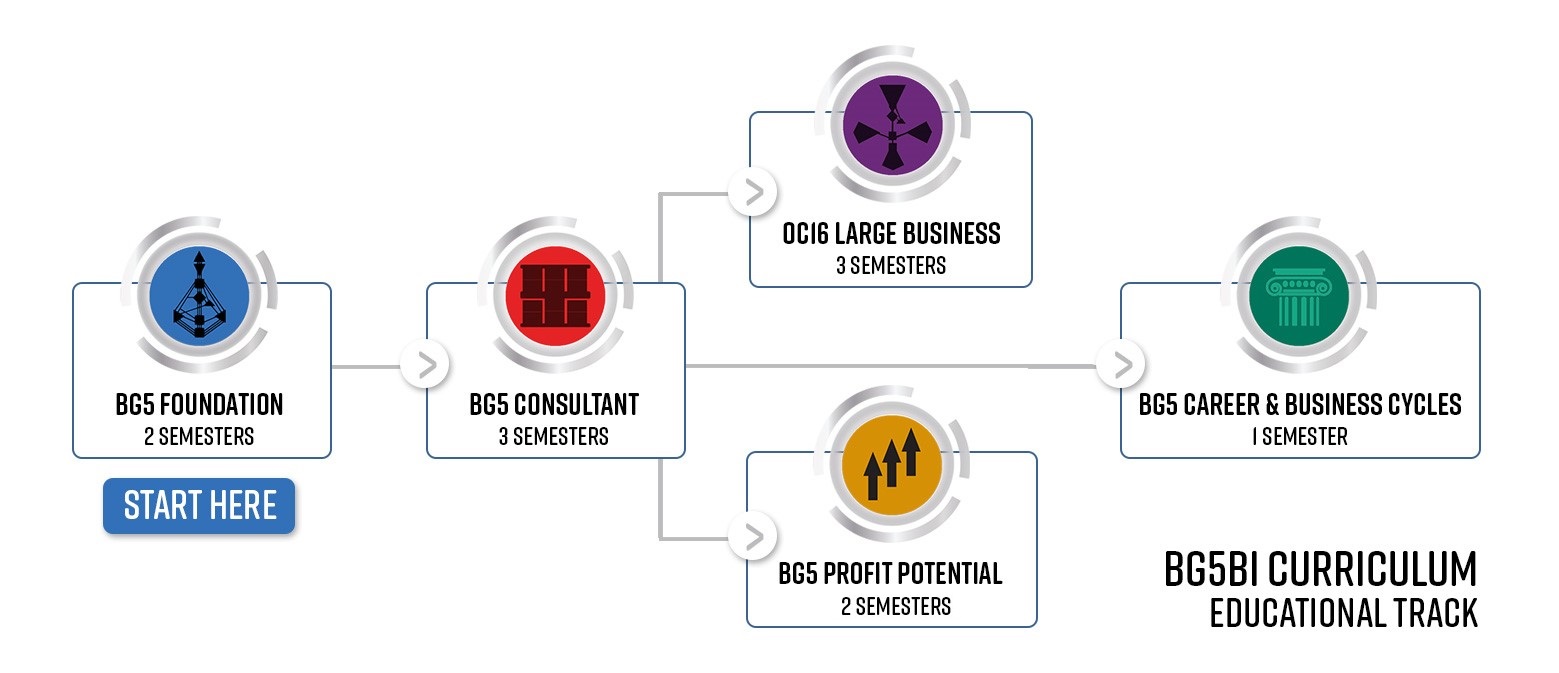
Sean Michael is an IHDS Certified Human Design Analyst, as well as a Certified BG5 Consultant, Foundations Instructor, and Profit Potential Coach. If you want to work with your unique prosperity potential through following and understanding the mechanics of your Design, feel free to contact him at innerblueprintconsulting@gmail.com.
He is also a CAMFT Certified Clinical Supervisor at the Center for Psychotherapy and Integrative Health in Santa Barbara, CA, USA, where he offers training to Associates using BG5 and Human Design for personal and professional development.